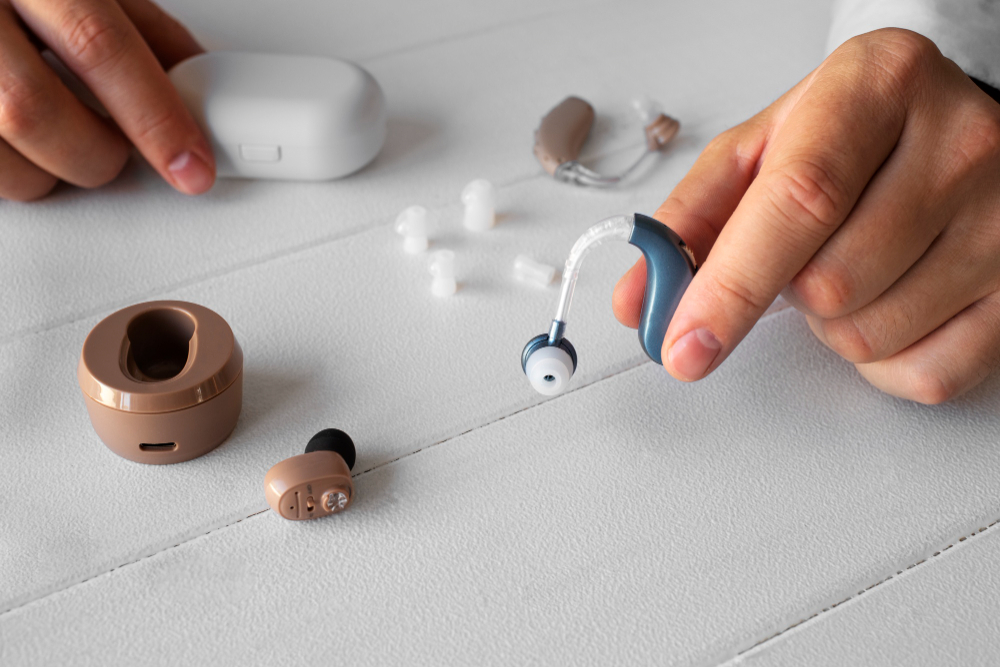
What Are Hearing Aids?
Hearing aids are small electronic devices that help people hear better. They make sounds louder and clearer. Many people use hearing aids to improve their hearing and enjoy daily life. According to the World Health Organization, hearing loss affects millions worldwide. Because of this, hearing aids are important for many people.
Common Types of Hearing Aids
There are several types of hearing aids. Each type fits different needs and lifestyles. Here are the most common types:
Behind-the-Ear (BTE): These rest behind the ear and connect to an ear mold inside the ear. They are easy to use and work well for most people.In-the-Ear (ITE): These fit inside the outer ear. They are less visible than BTE models and are simple to handle.In-the-Canal (ITC) and Completely-in-Canal (CIC): These are very small and fit partly or fully inside the ear canal. Because of their size, they are less noticeable.Receiver-in-Canal (RIC): These are similar to BTE but have a thin wire instead of a tube. They are lightweight and comfortable.Digital Hearing Aids: These use digital technology to process sound. They offer clear sound and can be adjusted for different environments.How Hearing Aids Work
Hearing aids have three main parts: a microphone, an amplifier, and a speaker. First, the microphone picks up sounds from the environment. Next, the amplifier makes these sounds louder. Finally, the speaker sends the sound into your ear. Because of this process, you can hear better in many situations. Modern hearing aids also reduce background noise and improve speech clarity.
Benefits of Using Hearing Aids
There are many benefits to using hearing aids. For example, they help you:
Hear conversations more clearlyEnjoy music and TV at normal volumesStay active in social situationsFeel more confident and independentReduce the risk of feeling lonely or isolatedIn addition, studies show that hearing aids can improve your quality of life. Many people report feeling happier and more connected with others.
How to Choose the Right Hearing Aid
Choosing the best hearing aid depends on your needs and lifestyle. Here are some steps to help you decide:
Get a hearing test: Visit a hearing specialist for a full check-up. This will help you understand your hearing loss.Consider your daily activities: Think about where you spend most of your time. For example, do you need help in noisy places?Set a budget: Hearing aids come in many price ranges. Affordable hearing aids are available, but features may vary.Check for features: Look for features like noise reduction, rechargeable batteries, or Bluetooth connectivity.Read hearing aid reviews: Reviews from other users can help you learn about comfort and performance.Ask about a trial period: Many providers offer a trial so you can test the hearing aid before buying.Because each person is different, it is important to talk to a hearing specialist before making a choice.
Tips for First-Time Users
Wearing hearing aids for the first time can feel strange. However, these tips can help you adjust:
Start by wearing them for a few hours each dayPractice listening in quiet places before trying noisy areasBe patient, as it may take a few weeks to get used to new soundsAsk family and friends to speak clearly and face you when talkingFollow up with your hearing specialist for adjustments if neededCare and Maintenance of Hearing Aids
Proper care keeps your hearing aids working well. Here are some simple steps:
Clean your hearing aids daily with a soft, dry clothKeep them away from water and moistureStore them in a dry, safe place when not in useChange or recharge batteries as neededSchedule regular check-ups with your hearing specialistBecause hearing aids are delicate, handle them gently to avoid damage.
Frequently Asked Questions About Hearing Aids
Are hearing aids covered by insurance? Some insurance plans cover part of the cost. Check with your provider for details.How long do hearing aids last? Most hearing aids last 3 to 7 years with proper care.Can I use hearing aids with my phone? Many digital hearing aids connect to smartphones for easy control and streaming.Are there hearing aids for seniors? Yes, there are many models designed for seniors, offering simple controls and comfort.What if my hearing aid stops working? Try changing the battery or cleaning it. If problems continue, contact your hearing specialist.Conclusion
Hearing aids can make a big difference in your life. They help you stay connected and enjoy daily activities. For the best results, consult a hearing specialist for personalized advice on hearing aids.