
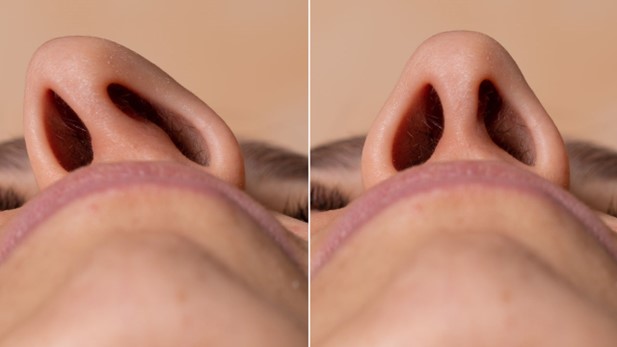
Introduction:
Deviated nasal septum is a common condition that occurs when the thin wall (septum) between the nasal passages is displaced or deviated to one side. This can lead to various symptoms and potential complications. In this blog, we will explore the symptoms, causes, types of deviated nasal septum, and its association with sleep apnea and sinusitis.
Deviated Nasal Septum: Symptoms and Causes:
Deviated nasal septum can cause a range of symptoms, including:
- Nasal congestion: Difficulty in breathing through one or both nostrils due to reduced airflow.
- Frequent nosebleeds: The deviated septum can cause the nasal tissues to become dry and prone to bleeding.
- Facial pain and headaches: Pressure and inflammation in the sinuses can result in chronic headaches and facial pain.
- Postnasal drip: Excess mucus production due to nasal blockage can lead to the sensation of mucus running down the throat.
The most common causes of deviated nasal septum include:
- Congenital condition: Some individuals are born with a deviated septum, which may become more apparent over time.
- Trauma or injury: A forceful impact to the nose, such as during accidents or sports injuries, can cause the septum to deviate.
Types of Deviated Nasal Septum:
Deviated nasal septum can be classified into different types based on the location and severity of the deviation:
- C-shaped deviation: The septum is curved in a C shape, partially obstructing one nasal passage.
- S-shaped deviation: The septum is curved in an S shape, causing significant obstruction in both nasal passages.
- Spur: A bony projection on the septum that causes nasal blockage and discomfort.
Deviated Nasal Septum and Sleep Apnea:
In some cases, a deviated nasal septum can contribute to sleep apnea, a sleep disorder characterised by interrupted breathing during sleep. The blockage or obstruction in the nasal passages can disrupt normal airflow, leading to sleep apnea symptoms such as loud snoring, gasping, and daytime fatigue.
Deviated Nasal Septum and Sinusitis:
A deviated nasal septum can increase the likelihood of developing sinusitis, an inflammation of the sinuses. The blocked or narrowed nasal passages make it difficult for mucus to drain properly, leading to a buildup of bacteria and subsequent sinus infections.
Treatment of Deviated Nasal Septum:
The treatment for deviated nasal septum depends on the severity of symptoms and associated complications. Here are some common treatment options:
- Medications: Nasal decongestants, corticosteroid sprays, and antihistamines can provide temporary relief from congestion and associated symptoms.
- Septoplasty: Surgical correction of the deviated septum to straighten and realign it, improving nasal airflow and alleviating symptoms.
- Turbinate reduction: In cases where enlarged turbinates contribute to nasal obstruction, they may be reduced in size through surgical procedures.
- Sinusitis management: If deviated nasal septum is causing chronic sinusitis, appropriate medical treatment for sinusitis may be prescribed along with septal correction.
Consult Dr. Jitendra Patel, Best ENT Specialist in Rajkot:
For an accurate diagnosis, personalised treatment, and expert guidance on the deviated nasal septum, consult Dr Jitendra Patel, the renowned ENT specialist in Rajkot.